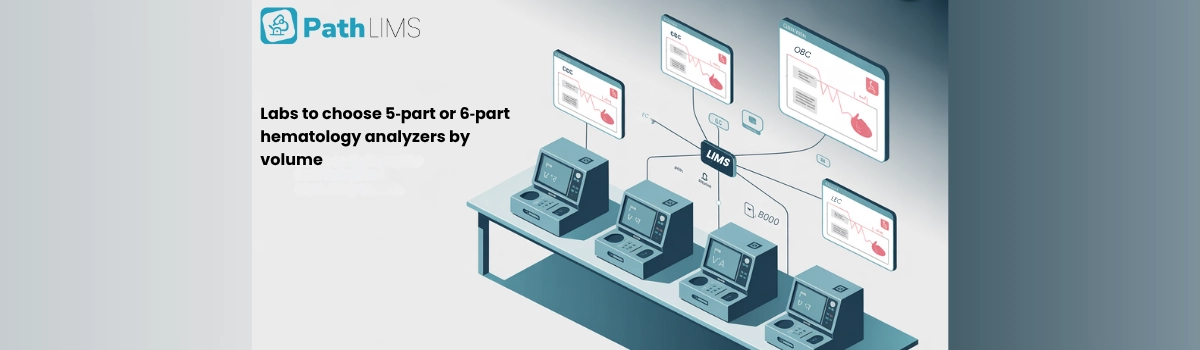
Walk into any modern lab today and you’ll notice a clear shift. Tasks that once required constant manual oversight are now supported by quiet, powerful layers of intelligence running in the background. That shift is largely driven by AI in LIMS.
That’s where AI-powered LIMS software is starting to change the game.
Used thoughtfully, AI-enhanced LIMS can streamline repetitive tasks, highlight what matters in real time, and support faster, safer decisions across R&D, diagnostics, and production.
Key Takeaways
- AI transforms LIMS from a recordkeeping tool into an intelligent decision partner, helping labs spot trends, prevent errors, and stay ahead of issues.
- Automation and predictive analytics reduce manual work, enabling smoother workflows, fewer bottlenecks, and faster turnaround times.
- Strong data foundations are essential—clean, connected datasets make AI more accurate, compliant, and trustworthy.
- Successful AI adoption starts small, with a clear use case, good partners, and a culture that encourages learning and transparency.
What Is AI in LIMS?
LIMS full form: Laboratory Information Management System.
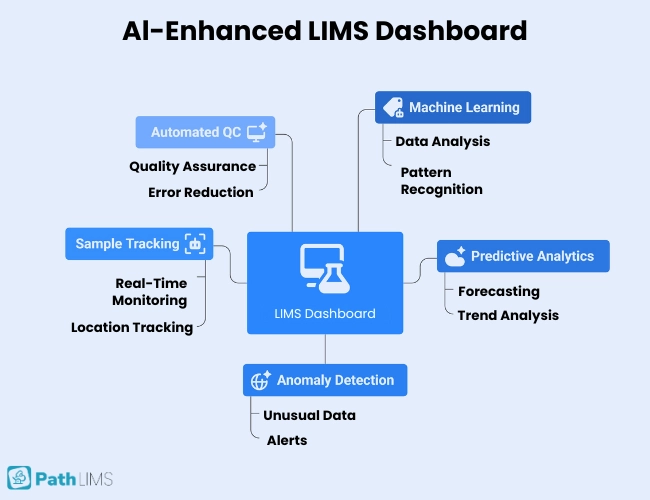
AI in LIMS means adding machine learning, predictive analytics, and pattern-recognition tools to the heart of the LIMS platform.
Instead of simply storing results, the system can understand relationships in the data, detect unusual patterns, and anticipate possible outcomes.
In practice, this shows up in automated sample tracking, early anomaly detection, and intelligent quality checks that evolve as the system sees more data.
For digital product teams, think of it as embedding an always-on analyst inside the LIMS—one that works at the speed of the lab.
Key AI Trends Reshaping LIMS
Automation and Intelligent Workflows
Many labs are still weighed down by routine manual steps—entering data, checking forms, correcting typos. AI lightens that load.
Systems can read handwritten requisition forms, validate missing fields, and route information to the right workflow with little human effort.
Machine learning also helps labs plan smarter. With enough historical data, AI can balance workloads, prioritize urgent samples, and minimize bottlenecks.
As these models continue learning, the workflows become smoother, faster, and more accurate.
Predictive Insights and Decision Support
Most traditional LIMS platforms excel at tracking but struggle with telling the story behind the data.
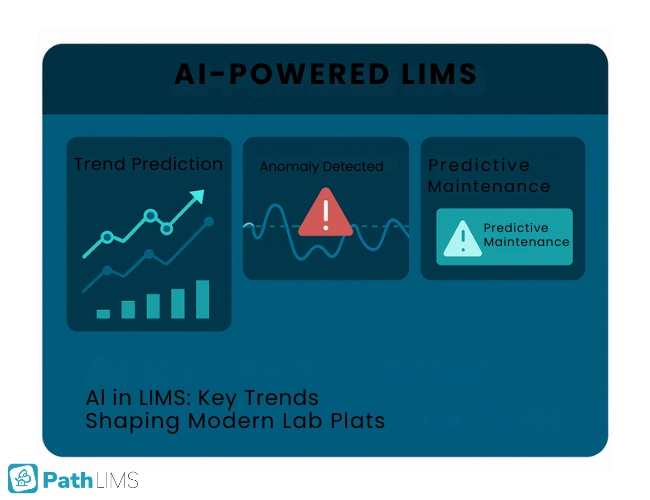
AI-driven analytics fill this gap. They highlight trends, predict risks, and notify teams before a problem escalates.
Pharma and diagnostic labs use these insights to forecast stability issues, plan maintenance for critical instruments, and understand which factors drive variability.
This moves teams from reactive troubleshooting to proactive decision-making.
Data Quality, Governance, and Compliance
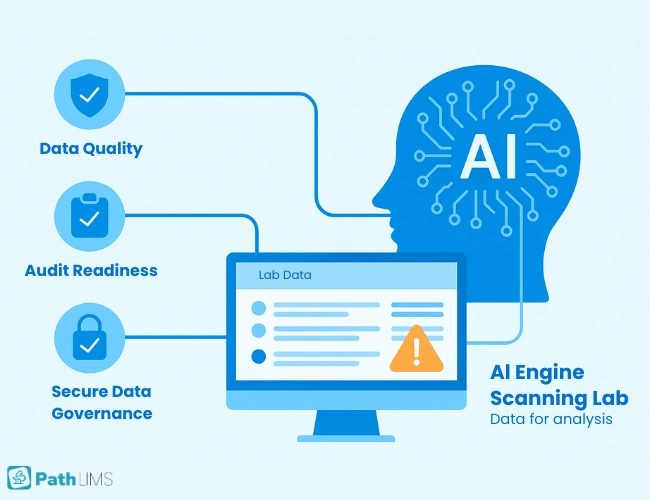
AI becomes even more valuable when data quality is strong—and it also helps strengthen that foundation.
Algorithms continuously scan for inconsistencies, missing fields, or out-of-range values.
In regulated environments, AI-assisted reporting helps teams stay audit-ready by surfacing deviations early and summarizing them in compliance-friendly formats.
All of this works best when LIMS, ELNs, and business systems share clean, well-aligned datasets.
Cloud, Mobility, and Mixed Reality
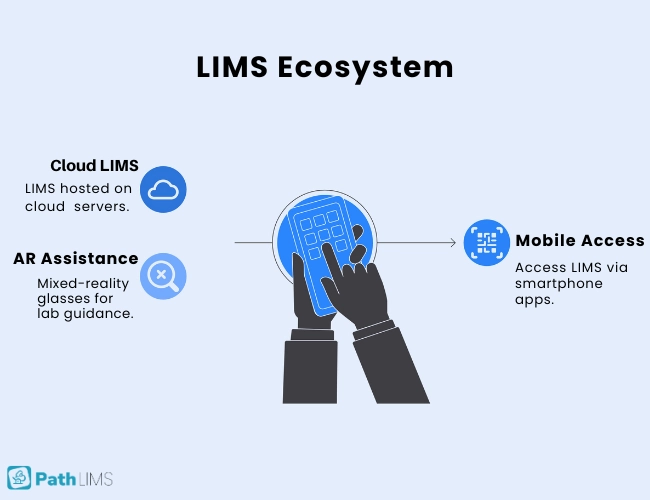
Cloud-based LIMS solutions are becoming the standard. With AI running alongside, they unlock greater scalability and easier integrations.
Researchers can view dashboards, record findings, and validate data from mobile devices, while AI checks inputs for accuracy.
Some advanced labs are exploring mixed-reality overlays that guide technicians through procedures step by step.
This combination—cloud + mobility + AI—helps labs work faster without sacrificing quality or consistency.
Difference Table: Traditional LIMS vs AI-Enhanced LIMS
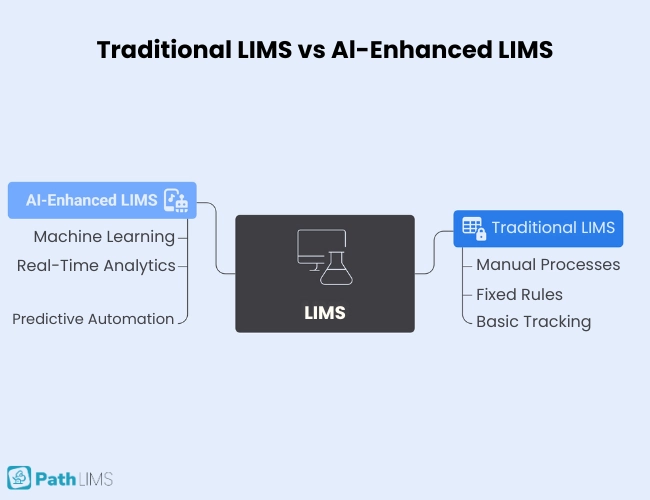
Difference Table
| Approach | How It Works | Benefits for Teams | Limitations / Risks |
|---|---|---|---|
| Traditional LIMS | Tracks samples and results using fixed workflows and predefined rules. | Strong traceability, basic automation, and essential recordkeeping. | Limited support for pattern recognition, trend analysis, or unstructured data. |
| AI-Enhanced LIMS | Adds ML, predictive analytics, NLP, and continuous monitoring to core LIMS. | Automates tasks, surfaces insights, supports predictive decisions and ongoing quality control. | Requires good data foundations and change management to ensure trust and adoption. |
AI doesn’t replace the LIMS—it elevates it from a storage system to an intelligent partner in daily lab operations.
Business Impact for SaaS and Ecommerce Stakeholders
From Operational Tool to Strategic Platform
LIMS has traditionally been an operational must-have. With AI, it becomes a differentiator.
For SaaS-focused teams, this opens the door to new value propositions—advanced analytics, deeper insights, and workflows that adapt rather than react.
Customers increasingly want tools that guide decisions, not just record events.
Revenue, Efficiency, and Risk
Thoughtful AI programs can positively influence both efficiency and revenue.
Labs benefit from streamlined processes, reduced retesting, and better resource planning.
AI-driven monitoring also lowers the risk of failed batches or overlooked quality issues.
For vendors, this means stronger retention and more compelling reasons for customers to upgrade.
Product and Roadmap Implications
As AI becomes a standard expectation, analytics, dashboards, and guided workflows must be part of the core product—not add-ons.
Teams will need to prioritize feature explainability and intuitive UX so users feel confident acting on AI recommendations.
This shift in LIMS mirrors a bigger movement across healthcare—AI is quietly becoming a co-pilot for clinicians too, as you can see in this overview of AI in clinical practice and diagnostics.
Accessibility, Ethics, and Trust in AI-Driven LIMS
Designing Respectful, Dismissible Interfaces
AI insights should support users—not interrupt them.
Use unobtrusive notifications, easy-to-close alerts, and panels that let users control how and when they engage.
Respect for user flow builds trust.
Consent, Privacy, and Data Use
AI relies on sensitive data. Transparency is essential.
Explain how data is used, give users opt-in or opt-out options where appropriate, and ensure agreements clearly state how information is stored and shared.
Ethical data use helps AI succeed long-term.
Accessibility (a11y) for AI Features
As interfaces become more complex, accessibility becomes even more important.
Use plain language, keyboard-friendly navigation, strong contrast, and meaningful alt text.
Every user—regardless of ability—should be able to understand and act on AI insights.
How to Get Started with AI in Your LIMS
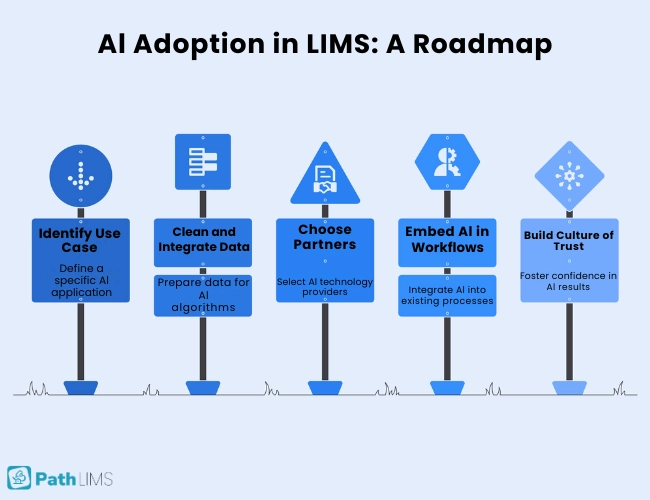
1. Start with One Clear Use Case
The most successful AI rollouts begin small. Pick one meaningful problem—like predictive maintenance or quality analytics—and focus your efforts there.
Clear wins build momentum.
2. Get a Handle on Your Data
AI can’t overcome disorganized data. Start by cleaning key datasets and aligning your LIMS, ELN, and business systems.
Good data stewardship is the foundation for every AI feature.
3. Choose Technologies and Partners Wisely
Look for partners who understand both lab workflows and data science.
Ask for proof of how they handle privacy, security, and data quality.
4. Integrate AI into Everyday Workflows
AI should feel like part of the system you already use—not another platform to juggle.
Embed insights into dashboards, forms, and reports so they’re available at the moment of decision.
5. Build a Culture That Trusts and Questions AI
AI succeeds when teams understand it and feel comfortable using it.
Offer training, explain how insights are generated, and encourage curiosity.
Trust grows as people see real improvements in turnaround time, quality, and efficiency.
FAQs
1. Why should our lab software roadmap include AI in LIMS?
AI elevates LIMS from a workflow tool to a decision-support system. It helps labs minimize errors, accelerate research, and uncover insights that static reports simply can’t show.
2. Do we need perfect data before starting?
Not perfect—just intentional. Begin by cleaning the most important datasets and integrating the core systems that your chosen use case depends on.
3. How does AI in LIMS affect regulatory compliance?
AI helps by flagging inconsistencies early and generating clear, audit-friendly summaries. But teams still need to validate models and document logic for regulators.
4. What are typical first AI use cases for LIMS?
Predictive maintenance, quality analytics, and performance dashboards are common starting points because they deliver value without rewriting entire workflows.
5. How do we keep AI features accessible to non-technical users?
Use simple language, curated dashboards, dismissible alerts, and brief explanations so users can understand what the AI is suggesting and why.
6. Can AI in LIMS replace lab staff?
Not today. AI is best used to support staff by handling repetitive.
Want to Fix Common Lab Errors Too?
If you’re exploring how AI can elevate your LIMS, you may also find it helpful to revisit the basics. Many labs still struggle with everyday issues—mislabeling, transcription mistakes, and data entry slip-ups—that silently drain time and accuracy.
To help teams tackle these challenges, here’s a practical resource you may find useful:
Strengthening these fundamentals makes AI adoption smoother and far more effective.
Adopt AI in LIMS Thoughtfully and Ethically
AI is steadily transforming how labs operate. Instead of being just a logbook, AI-powered LIMS software becomes a smart, always-on assistant:
- Automating repetitive tasks
- Improving data quality
- Supporting faster, safer decisions
Whether you’re comparing LIMS 6.0, hunting for the best LIMS 2025/2026, or upgrading an older system, one question matters:
How well does this LIMS help my people think and act better every day?
Start small, focus on real lab problems, and respect privacy, ethics, and accessibility. That’s how AI in LIMS moves from slideware to real-world impact.
If you’re already using a LIMS and want to explore next steps, begin by reviewing your current lab errors and bottlenecks, then map where AI could quietly remove the friction.
Table of Contents
- Key Takeaways
- What Is AI in LIMS?
- Key AI Trends Reshaping LIMS
- Difference Table: Traditional LIMS vs AI-Enhanced LIMS
- Business Impact for SaaS and Ecommerce Stakeholders
- Accessibility, Ethics, and Trust in AI-Driven LIMS
- How to Get Started with AI in Your LIMS
- Want to Fix Common Lab Errors Too?
- Adopt AI in LIMS Thoughtfully and Ethically